
Do You Know What Your Website Is Doing for Your Business?
Introduction
Your website may be attracting visitors, but do you know whether those visitors are actually helping your business?
It is easy to focus on headline numbers such as website traffic. Seeing visitor numbers increase can be encouraging, but traffic alone doesn’t tell you whether your website is doing its job.
A business website should have a purpose. It might be there to generate enquiries, sell products, encourage bookings, build awareness, provide information or help potential customers understand your services.
Web analytics can help you see whether that is actually happening.
It can show where visitors come from, which pages they use and whether they take important actions such as completing an enquiry form, making a purchase, downloading information or contacting your business.
The objective isn’t to collect as much data as possible or spend hours studying reports.
It is to identify the information that matters to your business and use it to answer practical questions. Which parts of your website are working? Where are potential customers coming from? Which pages contribute to enquiries? Where might visitors be leaving before taking the next step?
Understanding what your website is actually doing gives you a much stronger basis for deciding what to improve and where to concentrate your time and resources.
Website Traffic Doesn’t Tell the Whole Story
More website traffic can be a positive sign, but visitor numbers alone don’t tell you whether your website is contributing to your business.
Imagine two websites. One receives thousands of visits each month but generates very few enquiries. The other attracts considerably fewer visitors, but those visitors regularly view its services and make contact.
From a business perspective, the smaller audience may be considerably more valuable.
This is why traffic needs context.
You need to understand who is arriving, where they came from, which pages they use and, most importantly, whether they take actions that matter to your business.
An increase in traffic caused by a popular article might build awareness and introduce new people to your business. But if those visitors never explore your services or take another useful action, the commercial value may be limited.
Equally, a service page with relatively modest traffic might be extremely important if a significant proportion of its visitors go on to make an enquiry.
Rather than asking only, “How many people visited our website?”, start asking, “What did those visitors do?”
That simple change of perspective moves web analytics away from counting visitors and towards understanding whether your website is attracting the right people and helping them take the next step.
Where Are Your Visitors Coming From?
Knowing how people find your website can help you understand which parts of your marketing are actually bringing potential customers to your business.
Visitors may arrive through Google and other search engines, links from other websites, social media, email campaigns, online directories or by going directly to your website.
The important question isn’t simply which source sends the most visitors. It is which sources send visitors who are genuinely interested in what your business offers.
For example, organic search might generate a steady flow of people discovering your services. A local business directory could send far fewer visitors, but those visitors may be more likely to make an enquiry. A social media post might generate a sudden increase in traffic without producing any meaningful business activity.
Looking at traffic sources alongside what visitors subsequently do can help you understand these differences.
This can also help when deciding where to concentrate your marketing effort. If a particular activity consistently brings relevant visitors who explore your services or contact you, that is useful evidence when deciding whether to invest more time or money in it.
Rather than treating all website traffic as equal, look at where your visitors come from and what happens after they arrive.
The source generating the most traffic isn’t necessarily the one generating the most value.
Which Pages Are Helping Your Business?
Not every page on your website has the same purpose, and the pages receiving the most visitors aren’t necessarily the ones providing the greatest value to your business.
An article or guide might attract people through search and introduce them to your business for the first time. A service page may receive fewer visits but play an important role in convincing potential customers that you can help them. Your contact or booking page might receive relatively little traffic but be directly connected to generating enquiries.
Analytics can help you understand these different roles.
Look at which pages people use to enter your website, which pages they visit next and whether particular content regularly leads visitors towards your services or contact information.
This can reveal opportunities as well as problems.
A popular article might attract plenty of relevant visitors but provide no obvious route towards your services. An important service page might generate enquiries from the people who reach it but receive very little traffic. Another page may attract visitors but consistently fail to encourage them to take a useful next step.
Understanding these patterns gives you something practical to work with.
You might strengthen links between useful content and relevant services, make an important page easier to find or improve a page that receives plenty of traffic but produces little meaningful activity.
The question isn’t simply which pages are popular. It is which pages are helping visitors move towards an outcome that matters to your business.
Are Visitors Taking the Actions You Want?
Every business website should encourage visitors towards one or more useful actions.
For a service business, that might mean completing an enquiry form, requesting a quotation, making a telephone call or booking a consultation. An online retailer may be primarily interested in purchases, while other businesses might want visitors to download a guide, join a mailing list or register for an event.
These actions are often referred to as conversions.
Tracking them can help you understand whether your website is achieving its purpose rather than simply attracting visitors.
For example, you may discover that one service page regularly generates enquiries while another receives similar traffic but produces very few. Visitors from a particular traffic source might be much more likely to contact you, or people reading a particular article may frequently go on to explore one of your services.
This information can also highlight where something may be preventing visitors from taking the next step.
Perhaps the call to action isn’t clear enough. An enquiry form might be unnecessarily complicated. Important information could be missing, or visitors may not be given enough reassurance before being asked to contact you.
Not every visitor will become a customer, and not every useful action results in an immediate sale.
The important thing is to decide which actions indicate genuine interest in your business and make sure you can measure them. That gives you a much better indication of website effectiveness than traffic figures alone.
Five Things Every Business Should Measure
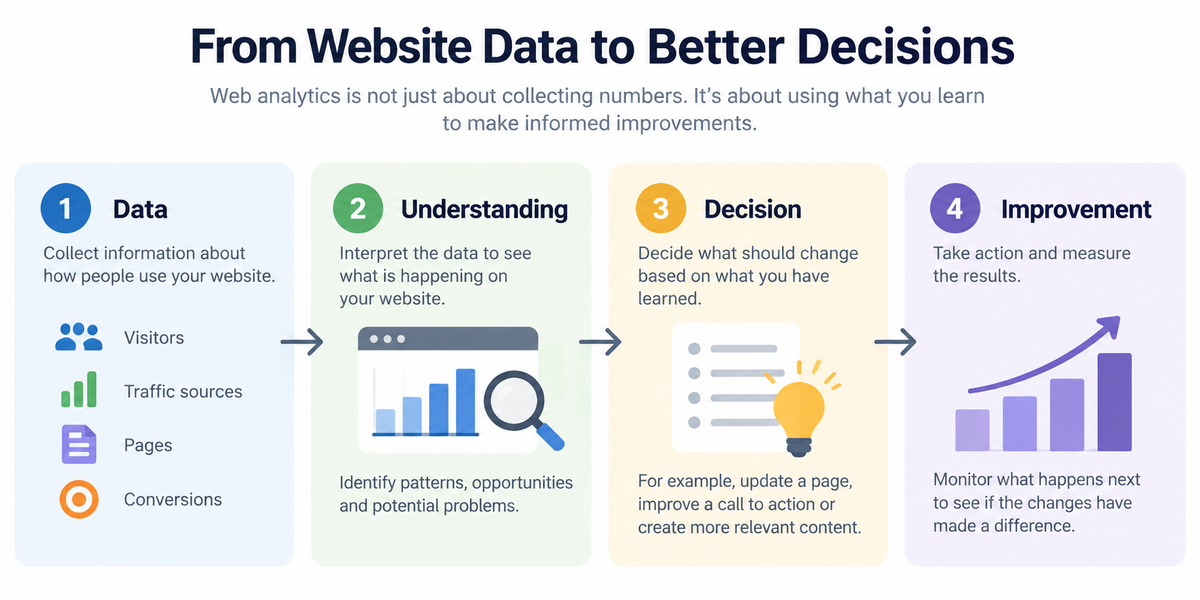
You don’t need to monitor dozens of statistics to understand whether your website is working effectively. Start with a small number of measurements that answer useful business questions.
Here are five areas worth monitoring:
- Where your visitors come from
Understand whether people are finding you through search engines, other websites, social media, email, directories or other marketing activity. - Which pages people use
Identify the pages attracting visitors and the content they use once they arrive. Pay particular attention to important service, product and contact pages. - How visitors engage with your website
Look at whether people explore other pages, interact with your content and follow the journeys you expected them to take. - Which important actions visitors complete
Measure the activities that matter to your business, such as enquiries, purchases, bookings, downloads or newsletter registrations. - Which traffic and pages contribute to results
Bring the information together. Which sources send useful visitors? Which pages help generate enquiries or other important actions? Where might visitors be dropping out before completing the journey?
The objective isn’t to produce complicated reports. It is to create a simple picture of how people find your website, what they do when they arrive and whether that activity contributes to your business.
Once you understand those five areas, you have a much stronger basis for deciding what needs attention and where an improvement could make a difference.
Turn Website Data Into Better Decisions
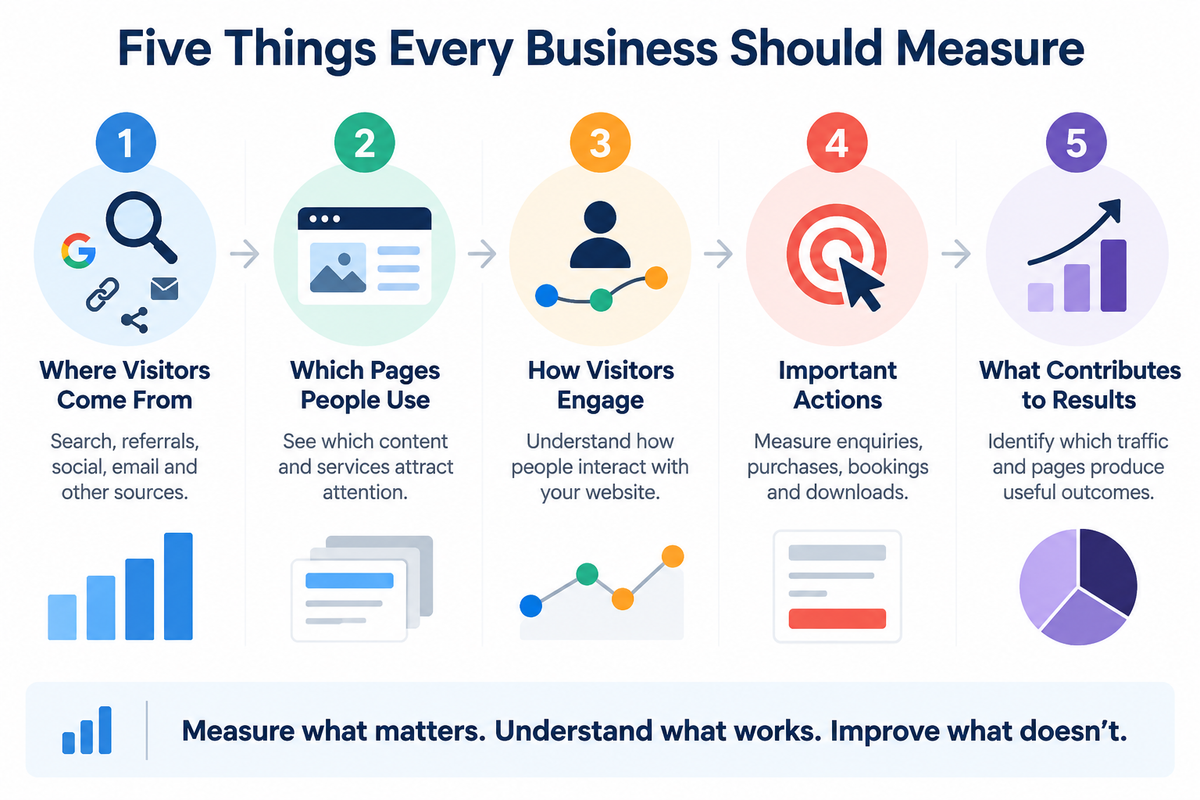
Collecting website data has little value unless you use it to make better decisions.
The useful part of web analytics is identifying patterns, asking why they are happening and deciding whether there is something you should change.
For example, you might discover that an important service page attracts plenty of visitors but generates very few enquiries. That gives you a reason to investigate. Is the service explained clearly? Is the call to action obvious? Does the page answer the questions a potential customer is likely to have?
You might find that a particular article regularly attracts relevant visitors through search. If some of those visitors then explore your services, that could indicate an opportunity to create more content around the subject or make the route from the article to your commercial pages clearer.
Analytics can also help you assess marketing activity. If one source generates large numbers of visitors but few useful actions, while another sends fewer visitors who regularly become enquiries, that information can help you decide where your marketing effort is best spent.
Avoid reacting to every small movement in the figures. Look for meaningful patterns over time and consider other factors that may have influenced the results.
Then make a specific improvement and measure again.
The process is straightforward: understand what is happening, decide what could be improved, make the change and see whether it produces a better result.
That is when website analytics becomes more than a collection of numbers and starts becoming useful business information.
For a more detailed introduction to website measurement, read our Digital Strategy guide, What Is Web Analytics? A Practical Guide for Small Businesses.
Do You Really Know How Your Website Is Performing?
It is difficult to improve a website effectively if you don’t know what is already working and where potential customers may be encountering problems.
Traffic figures provide part of the picture, but they don’t tell you whether visitors are finding the right information, exploring your services or taking the actions that matter to your business.
An independent review can help you look beyond the headline numbers.
Digital Direction can review how your website is performing, looking at where visitors come from, which pages they use, how they interact with the site and whether important customer journeys are producing useful results.
The objective isn’t to produce another complicated analytics report filled with statistics. It is to identify what the data tells us about your website and turn that information into practical recommendations.
If you’re unsure whether your website is genuinely contributing to your business, talk to us about reviewing its performance and identifying where improvements could make the greatest difference.